


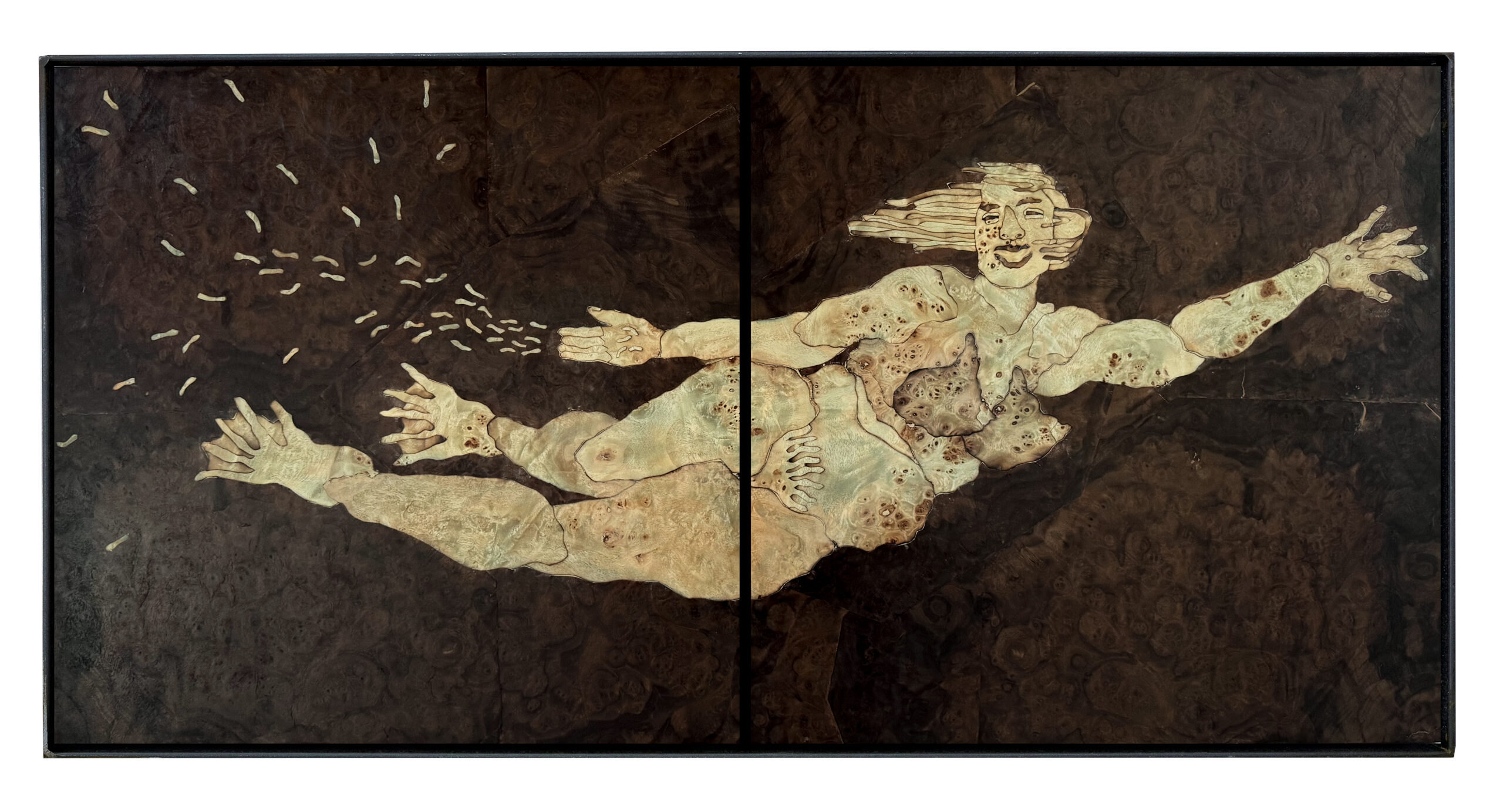
The Polish-born, Warsaw-based artist Liliana Zeic works with craft techniques, video, photography, objects, and text, creating intermedia and performative projects based on artistic research. Since 2020, she has increasingly turned to craft-based methods, primarily developing her own woodwork technique rooted in intarsia. Her artistic practice is grounded in queer feminism and queer ecology, most recently focusing on queer histories through the lens of folk mythology.
Speaking on bringing her work to Ireland, artist Liliana Ziec says:
“I’m incredibly excited to be working with Project Arts Centre. It’s a collaboration I’ve immersed myself in over the past few months, and I can’t wait to see how my work resonates in this space and in this city. I’m also deeply curious about the institution itself and feel honoured to be part of its program.”
Eating the Sun is part of a research-led curatorial project, developed in collaboration with Dr. Alex Gajowy (UCD), designed to introduce Central and Eastern European (CEE) lesbian artistic practices to an Irish audience. The current heightened interest in the region – spurred by events such as the Russian invasion of Ukraine and the ongoing attacks on queer and trans lives, as well as women’s reproductive rights – has also highlighted the persistent lack of understanding of the CEE region, particularly in the global North. This gap is even more pronounced in discussions surrounding gender and sexuality. A timely programme focused on CEE queer women’s practices offers a vital contribution to a more nuanced understanding of these themes.
In her work Zjadaczki Słońca (The Sun Eaters), Zeic’s ongoing preoccupations with the natural, the lesbian, and the historical/ mythical come together to mark the locality of the body. Nature here does not signify the biological – rather, it points to the connectedness of the body with the history of the soil wherefrom it comes. Histories of land and soil have long been interconnected with those of gender, body, and sexuality, these connections marked as much in spiritual practices as in legislative regulations. The natural materials Zeic uses in her work – the wood, the hay, the nettle ropes – come to articulate a rootedness of the desiring, transhistorical lesbian gaze in its locality.
