

Parking
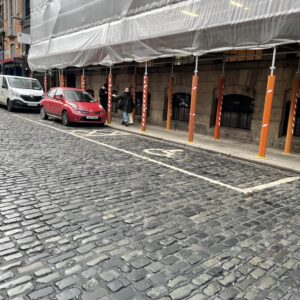
An accessible parking bay is available approximately 100 metres away, across the street, directly outside the Clarence Hotel.
Note: As of February 2026, the accessible parking bay mentioned above is temporarily unavailable due to ongoing construction work.
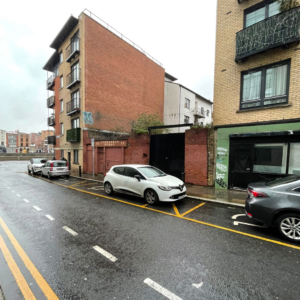
An alternative accessible parking bay is available on Fishamble Street, approximately 500 metres away, near the Dublin City Council offices.
For a map of accessible parking, please visit: Accessible Parking Spaces DCC – Disabled Persons Parking DCC 2021 – data.smartdublin.ie
Wheelchair Access
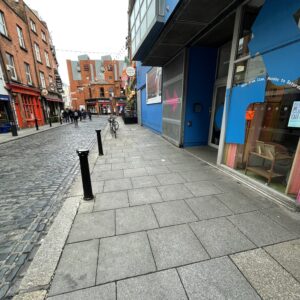
Please note that outside the building there is wide footpath, the road and surrounding streets have a cobblestone surface.
Temple Bar Access Guide
Project has developed a Temple Bar Access Guide that will give a more detailed description of the journey to Project Arts Centre. It includes information on factors like public transport, road surfaces and crowds. You can view this document here.
Video Journey
Project have also developed a selection of virtual journeys from popular public transport and parking locations to the venue. This information is also included in the above access guide. You can see the video of each route in the information below.
- You can view Route 1 (Westmorland Street LUAS stop to Project Arts Centre – Not Wheelchair Accessible) here.
- You can view Route 2 (Jurys Hotel Christchurch Taxi rank to Project Arts Centre – Not Wheelchair Accessible) here.
Temple Bar Access Alliance
Project Arts Centre is a proud member of The Temple Bar Access Alliance.
The Temple Bar Access Alliance (TBAA) is a collective of arts organisations located in Temple Bar, Dublin, initiated by Project Arts Centre and Arts & Disability Ireland. TBAA is committed to enhancing accessibility for arts audiences with disabilities.
Companion Tickets
As part of our support for disabled audiences, a free companion ticket for performances is available to audience members who require a companion as part of their access requirements. For more details, email adrian@projectartscentre.ie.
Wheelchair Access

The majority of Project Arts Centre is accessible for wheelchair users. The entrance to our building has an automated access door and both of our performance spaces have the facility for wheelchair spaces. Please advise our box office team when booking or leave a comment at checkout on your online order if you require a wheelchair seat or have any specific requirements.
NaviLens Codes
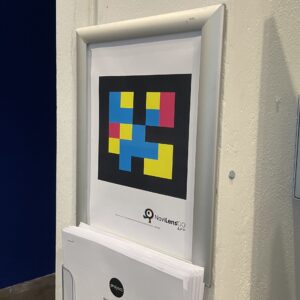
In 2026, Project will be exploring the use of NaviLens codes at various points of the building. NaviLens is a free application that uses colourful codes to assist users by p[providing artistic and navigational information around Project.
There are 2 NaviLens apps. These are available for Apple and Android devices.
NaviLens Go – This version of the app offers accessible information about key services in a format that best suits you.
NaviLens – This version of the app offers accessible directions and wayfinding information.
(opens in a new window)Download your preferred NaviLens app here.
Quiet Spaces
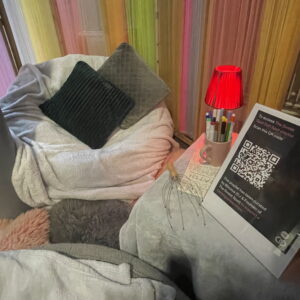
Quiet spaces are sometimes provided at specific events and performances. These spaces are away from the other busier parts of the building, usually one of our dressing rooms, and include items like hot water bottles, blankets and fidget toys.
Early Entry
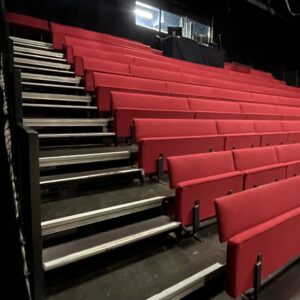
If you would like early entry to the auditorium, please let a member of our box office team know at least 30 minutes before the show so that we can accommodate you.
Guide Dogs

Guide dogs are permitted to performances, please advise our box office if you intend to attend with a guide dog. Water can be made available for guide dogs. The nearest green areas for guide dogs are located at Dublin castle or Dublin City Council Offices.
Sensory Tool Kit

Project Arts Centre offers a Sensory Tool Kit for anyone who may require it. It includes such items as ear defenders, sunglasses, nose clips, fidget toys and cushions.
If there are sensory adaptations that you need to make, to have a more enjoyable experience at Project, please get in touch with Adrian at adrian@projectartscentre.ie.
Upcoming Accessible Performances
For details on upcoming Accessible Performances, please click here.
Audio Description
Audio Description for live performance is a live verbal commentary providing information on the visual elements of a production as it unfolds, from sets, props and costumes to actors’ facial expressions and movements across the stage. Audio-described performances are available on certain performances throughout the year.
The equipment for our audio described performances are currently rented from Arts & Disability Ireland. These are small handheld devices that you can collect from Box Office which will be connected to an earpiece.
Irish Sign Language (ISL)
Irish Sign Language (ISL) is the sign language used in the Republic of Ireland. The language makes use of space and involves movement of the hands, body, face and head. A sign language interpreter interprets what a person says or signs simultaneously, or immediately afterwards.
ISL performances are available on certain performances throughout the year. An interpreter will be present on stage and will be appropriately lit so they are as visible as possible.
Assisted Listening

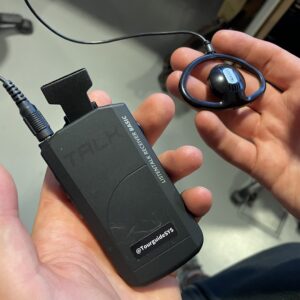
Assisted listening systems help people who are hard of hearing and/or hearing aid users by delivering clear, amplified sound directly to their hearing device, without amplifying background noise.
In 2025, Project acquired an assisted listening system for audience use at performances and events. The ListenTalk system includes a transmitter, receivers, earpieces, and neck loops. The neck loops are T-setting (Telecoil) compatible and not for Bluetooth hearing aids. Project are currently exploring how best to use this equipment and are planning to have it available across a range of settings, including performance spaces, ancillary events, and more informal occasions such as programme launches.
If you would like to attend an event and require an assisted listening device, please email adrian@projectartscentre.ie
Captioning

Captioning gives deaf and hard of hearing people access to live performances and screenings. It is similar to television and film subtitling. Captioning converts the spoken word into text, which is displayed on one or more caption units situated on, above or next to the stage.
Relaxed Performances

Relaxed Performances are specifically designed to welcome people who will benefit from a more relaxed performance environment, including people with an Autism Spectrum Condition, sensory and communication disorders, or a learning disability. They also benefit people with hidden disabilities and people who require a more flexible environment.
Touch Tours

Touch tours provide an accessible and engaging experience for visitors with disabilities, including those who are blind or have low vision. By enabling hands-on interaction with artworks, props, sets or costumes these tours provide opportunities to contextualise a performance or exhibition on display through touch, sound, and other sensory elements.


